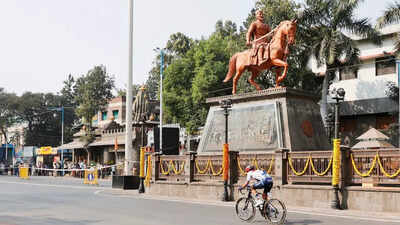
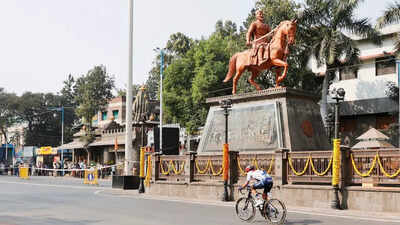
NEW DELHI: Cycling doesn’t wait for applause. It flashes past villages, highways and curious faces, leaving little time to settle in. Last week, during the Pune Grand Tour (PGT), India’s first UCI 2.2 road racing event, the Indian public for the first time watched professional cyclists carving through roads, villages and highways. It is never considered a spectator-friendly sport. Unlike other outdoor sports such as cricket or football, an on-ground spectator doesn’t get 90 minutes or five days to settle into a rhythm. Blink, and the race is gone.
Commentating on the sport, while keeping track of all the riders and explaining the geography to viewers, is an equally arduous task.“I don’t want to claim too much on my behalf, but it is, I think, one of the hardest sports to commentate,” Ned Boulting, one of the most recognisable voices in global cycling commentary, told TimesofIndia.com on the sidelines of the Pune Grand Tour (PGT), India’s first UCI 2.2 road racing event.Graham Jones, a co-commentator of Boulting and five-time Tour de France rider, finds himself walking a tightrope between decoding the complexities of cycling and providing entertainment.“That’s been a little bit of a challenge for us, but we’ve quite enjoyed it,” Jones said. “There are a lot of people unfamiliar with cycling, so we can’t get too deep into the technology and what’s going on.“We have to not go too simple because there are plenty of people who are cycling thinking, I know, I don’t want to hear all about that.”

Ned Boulting and Graham Jones (Special arrangements)
Commentating on cycling is not just about calling attacks or announcing winners. It has more: a complex web of tactics, geography, human fatigue and split-second decisions. And you can’t shy away from engaging with the audience.“I think information is the hardest part because again, to compare it to most sports, which are inside stadiums, you only have like 20 players or something like that. Here you have 170 something,” said Boulting.“They are almost impossible to identify because when you see the shot from head on, you can’t see a number. So you have to know what their kit looks like, first of all. And there are 28 different teams.“Some of whom I’d never heard of, I’ll be totally honest, before this race started, because they are amateur clubs from Amsterdam. And so I have to learn very fast what these new kids are like.”Even then, knowing the team isn’t enough.“There could be any number of six different riders on that team. So you have to learn very fast who’s got long hair, who’s got tattoos, who’s a little bit taller,” he added. Unlike football, where commentators often arrive with pre-written narratives, cycling offers no such luxury.“There’s no script because you have to react live,” Boulting stated. “As soon as you see me in the studio, till the very last minute, everything… none of that is scripted. That’s all just from the top of my head.”
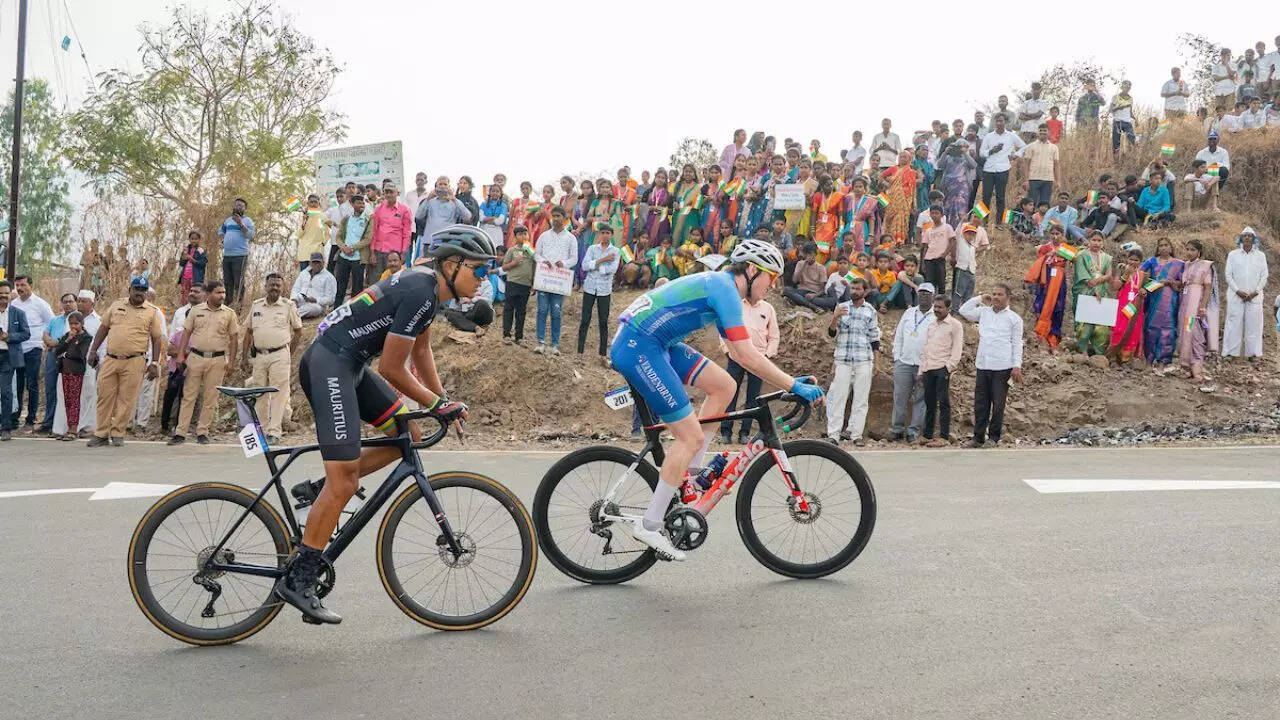
International riders pass through villages amid huge crowd (Special arrangements)
Cycling, however, offers something most sports cannot.“Because it’s on open roads, it shows off the countryside,” Jones explained. “Some of the drone shots we’ve seen over the last few days have been fantastic.”“If it’s a football tournament or a tennis tournament, it’s in a stadium. You’re not really showing off the countryside,” Jones explained, adding that this visual storytelling is often central to why governments and sponsors back such races.“It’s to promote and display to the rest of the world how nice this area is,” jones said, pointing to how events like the Tour de France have perfected this mix of sport and scenery, with castles, chateaux and communities dressing up fields just seen from helicopters.That understanding, Jones believes, is essential.“You need to understand the local culture and geography. I think the cycling bit is 50 percent of it,” he added with a smile. “The rest of it is promoting the town and the area and what the future holds.”ALSO READ: World Championship in India? UCI considers upgrading Pune Grand Tour’s status next yearCycling may not command the instant familiarity of cricket or football in India, but behind the microphone, it is as relentless, unforgiving, and, when done right, beautifully rewarding as it is on the roads.