
India’s presence in global higher education rankings has expanded sharply over the past decade, with the number of Indian institutions featured in the QS World University Rankings increasing from 11 in 2015 to 52 in the 2027 edition.The Centre informed the Lok Sabha on Monday that the rise reflects the expansion of India’s higher education ecosystem since the launch of the National Institutional Ranking Framework (NIRF) in 2015.
NIRF participation sees major increase
The NIRF was introduced to assess higher education institutions on parameters including teaching and learning resources, research and professional practices, graduation outcomes, outreach and inclusivity, and peer perception.Participation in the framework has also increased substantially. Applications rose from 6,272 in 2021 to 14,163 in 2025. During the same period, the number of unique institutions participating in NIRF increased from 4,030 to 7,692.The government has positioned the expansion as an indicator of growing competition and greater focus on institutional performance across the country.
26 Indian institutions improve in QS 2027
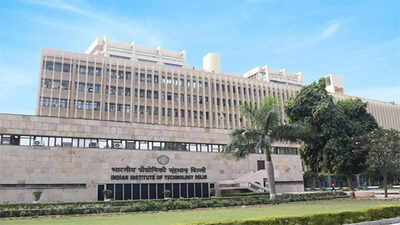
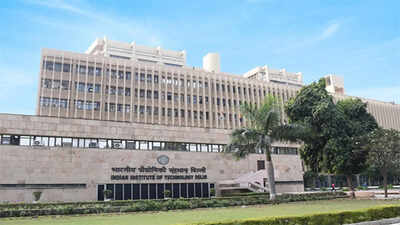
The QS World University Rankings 2027 show that India’s progress is not limited to the traditional IITs.Of the 52 Indian institutions ranked globally, 26 improved their positions, nine remained unchanged, and 15 declined. Two institutions entered the rankings for the first time.As many as 18 Indian institutions achieved their highest-ever QS rankings, including 13 institutions that are not IITs.IIT Delhi emerged as India’s highest-ranked institution in the 2027 edition, climbing five places from 123rd to 118th. The position matches the highest-ever ranking achieved by an Indian institution, previously held by IIT Bombay in the 2026 edition.IIT Bombay, however, dropped five places to 134th. IIT Madras improved to 170th, while IIT Kharagpur moved to 205th. IISc Bengaluru was ranked 221st.
Non-IIT institutions record significant gains
Some of the biggest improvements came from institutions outside the traditional IIT group.VIT climbed 94 places to rank 597th, while BITS Pilani rose 93 places to 575th. IIT Hyderabad gained 76 places, and Jamia Millia Islamia advanced by more than 75 places to reach 686th.Shoolini University also registered a significant improvement, rising 51 places to 452nd.The performance suggests that India’s global higher education presence is gradually becoming more diverse, with universities beyond the established engineering institutions gaining international visibility.
Government cites NEP 2020 and institutional expansion
The Centre attributed the improvement to several measures, including initiatives under the National Education Policy (NEP) 2020. The policy focuses on multidisciplinary education, critical thinking, research and innovation, infrastructure and teacher training.The government also highlighted the Institutions of Eminence scheme, RUSA/PM-USHA support for state universities and infrastructure development.Since 2014, 43 new premier institutions have reportedly been established, including seven IITs, eight Central universities and nine IIMs.The rise in QS representation marks a significant expansion of India’s global university footprint. However, with 15 institutions declining in the latest rankings, the challenge now is to convert this wider participation into sustained improvements in research, teaching quality, academic outcomes and international standing.