
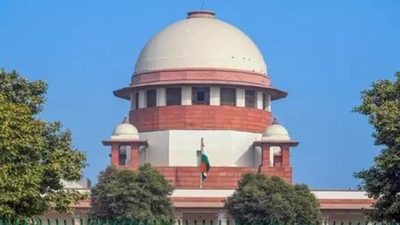
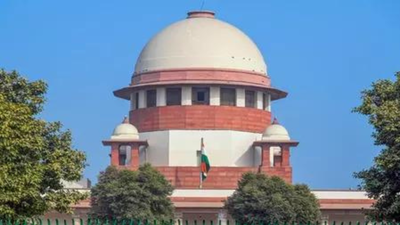
NEW DELHI: Transgender identity cards issued before the 2026 amendment to the law protecting transgender persons will continue to remain valid, the Centre told the Supreme Court on Monday, offering interim relief to cardholders whose legal status had come under question following the new legislation.Solicitor general Tushar Mehta gave the assurance before a bench headed by Chief Justice of India Surya Kant and comprising Justices Joymalya Bagchi and V Mohana, which was hearing around 15 petitions challenging the constitutional validity of the amended law.“I have taken instructions. The TGI ID cards issued earlier will continue to operate subject to the outcome (on the petitions),” news agency PTI quoted Mehta as saying.A Transgender Identity (TGI) card is issued through the government’s transgender portal and serves as official recognition of a person’s self-identified gender. It can also be used to facilitate changes to a person’s name and gender in official documents.The 2026 amendment has been challenged principally over changes to the earlier framework on gender self-identification. Petitioners have argued that the new law undermines the right recognised by the Supreme Court in its landmark 2014 NALSA judgment, which affirmed the right of transgender persons to determine their gender identity.During the hearing, senior advocate Jayna Kothari, appearing for one of the petitioners, sought directions for restoration of TGI cards that had already been cancelled. The bench declined to issue a blanket order and asked petitioners to bring individual cases before it.Kothari also sought protection for those who had applied for identity cards under the earlier framework but were still waiting for them to be issued. The court said it would consider the issue after receiving the Centre’s reply affidavit.Senior advocate Rajiv Shakdhar backed the request, submitting that the balance of convenience lay with the petitioners and that benefits already available to transgender persons should not be disrupted.Justice Bagchi, however, said such questions would have to be examined in light of the facts and circumstances of individual cases.Senior advocate Arundhati Katju argued that the 2019 legislation was based on the principle of self-identification and that benefits arising from the earlier law should not automatically cease with the 2026 amendment.The Centre informed the court that it would file its response to the challenges. The bench recorded the submissions and listed the petitions for final hearing after three weeks.
Share your thoughts in the comments
Be respectful · TOI community guidelines
Parliament passed the amendment bill on March 25, and it received presidential assent on March 30. Among other changes, the amended legislation excludes social orientations from its ambit and provides for graded punishment depending on the gravity of harm inflicted on transgender persons.One of the petitions has sought a declaration that the right to self-identification of gender, recognised in the NALSA ruling, is a fundamental right under Article 21 and “no legislation may make conditional upon bureaucratic certification, medical procedure, surgical intervention, or any clinical gateway of the State’s choosing”.