
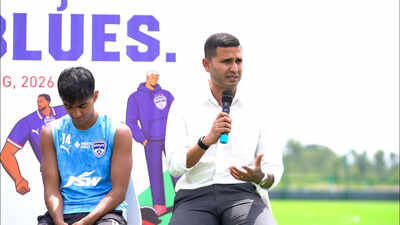
NEW DELHI: Indian football enters a new era in the upcoming season with the Indian Super League (ISL) transitioning to a club-led model, placing greater responsibility on clubs to shape the league’s commercial and sporting future. For Bengaluru FC, that means balancing ambition with sustainability while adapting to a fundamentally different operating landscape.In an exclusive conversation with TimesofIndia.com, Bengaluru FC’s Director of Football Darren Caldeira speaks about the opportunities and challenges of the new ISL, the club’s academy-driven recruitment strategy, the case for salary limits, the debate around Overseas Citizenship of India (OCI) players, and why he believes long-term investment in youth — not quick fixes — will determine Indian football’s future.EXCERPTSQ. The ISL is entering its first season under a club-led model. What do you make of it, and why did we reach such a stage?Darren Caldeira: I think it’s a positive step in my opinion. If you look at it globally as well, it’s not like this is a new phenomenon put together. It’s not always that you have the federations running the leagues or somebody else coming in, like a commercial partner, like we had before (Football Sports Development Limited), running the league.So I think this club-led model, there’s air of optimism from a lot of the conversations we are having, as well that probably this could be the right way forward. And while I say that, I don’t want to sugarcoat things. There are still a lot of formalities that need to be closed.But I genuinely believe that we are heading in the right direction through a lot of these offline conversations, whether it’s sponsorship or production, I will have to give credit to the FSDL as well in terms of a lot of the good work they’ve done. Because now that we are getting our hands dirty, actually being the ones that are having these conversations, whether it’s broadcasters, whether it’s sponsorship, you just realise there’s so many things to cover. But then again, we’ve taken it up as a challenge.We’re slowly onboarding a central team that comes in and we’ve already kind of had some soft integrations. But in my opinion, I think we are heading in the right direction.
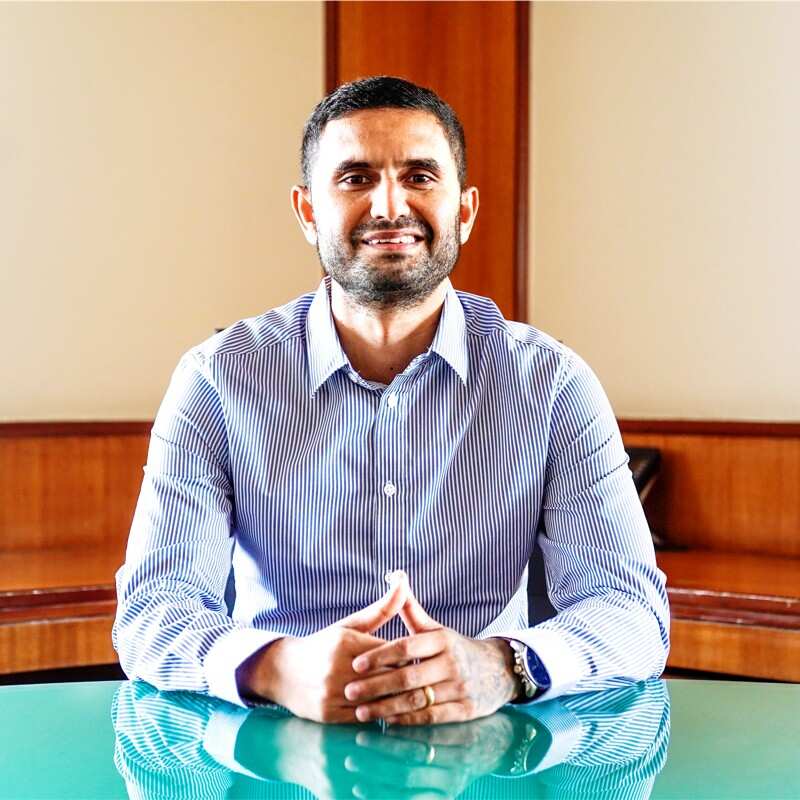
Bengaluru FC Director of Football Darren Caldeira. (Photo by special arrangement)
Q. From an organisational perspective, how do things change for clubs under this model?Caldeira: I think, more than anything, the whole commercial risk sits with the clubs, right? We are the ones having these hard conversations. Previously, it was FSDL speaking with production houses and broadcasters. We knew that we would be playing the league after paying X amount in terms of the franchise fee, and at the end of the year, there would be some sort of central revenue coming in. So that was a given.It was easier for clubs to plan as well because you knew what it would look like. Right now, there is that little bit of uncertainty that we talk about. You still don’t know what the numbers would look like or what the Profit & Loss (P&L) would look like.We’ve got tentative numbers that we’ve put down, but a lot of owners are still a little more cautious, while also being excited about how we can take control of things, probably bring down costs in certain verticals and focus on the marketing of the league.So, more than anything, I would say the commercial risk is a big change.
We haven’t signed any domestic players this season. But there’s a reason for that because we’ve got a very strong, robust youth academy that is churning out players year on year. We’ve had a couple of them make their debuts last season.
Darren Caldeira | Bengaluru FC’s Director of Football
Q. Has that uncertainty changed the way Bengaluru FC have approached transfers and squad building?Darren Caldeira: There are two things to that. We are a football club that has always been challenging for the ISL Shield or the title. We always want to win, right? But we are also mindful of the fact that the club economics have changed, and Indian football economics have changed.That said, we haven’t signed any domestic players this season. But there’s a reason for that because we’ve got a very strong, robust youth academy that is churning out players year on year. We’ve had a couple of them make their debuts last season.This time around, we didn’t extend the contracts of four or five players. Some of them are leaders in the group as well. But we felt we had good replacements coming in from our B team to the first team.So the focus was on how we could probably get some good, solid foreign players in. Last season, we only had two foreigners in our squad, and we missed out on the title by three points.So you never know, if we had two or three more foreigners, we could have been a lot more competitive, probably taking it down to the wire. The focus was more on foreign players this time around because we knew we had the Indian contingent pretty much sorted.The idea was to get certain profiles that we felt would strengthen the team. There was a lot of work involved with Pep [Muñoz] and me to make sure we got the players who would enhance what we already had and would be essential to pushing towards the league Shield.
We are a club that’s very, very focused on that academy and we don’t need to go and sign players from the outset. So even if tomorrow, we feel we’ve lost a quality player, maybe an Ashique (Kuruniyan) or maybe a Ryan (Williams) or someone. We know that we’ve got a replacement within the academy.
Darren Caldeira | Bengaluru FC’s Director of Football
Q. Is Bengaluru FC’s academy-first approach the model Indian football should be following?Darren Caldeira: We’ve always been a football club (that is) big on the academy. You look at our first team right now, we’ve got more than half of the squad that have been part of our academy.And for us, it’s a no-brainer. A lot of teams, when they had to strengthen their squads in the summer, had to reach out to other clubs, look at the free agents and things like that. And all we had to do was look right into our academy straight away to see who comes in.So for us, we’re always looking to get those right players in because like I said, the economics of the league has changed as well. There’s been this constant conversation about probably Indian players’ salaries being inflated. I think that bubble has burst to a certain extent.But then again, we are a club that’s very, very focused on that academy and we don’t need to go and sign players from the outset. So even if tomorrow, we feel we’ve lost a quality player, maybe an Ashique (Kuruniyan) or maybe a Ryan (Williams) or someone. We know that we’ve got a replacement within the academy.Of course, we’ll probably not be at that level and cannot hit the ground running, but we’re ready to throw them in the deep end. I think Pep’s also very big on age is not a factor. Nationality is not a factor to us. If you’re good enough, you’re old enough.Q. Should the ISL introduce salary caps?Darren Caldeira: 100 percent. We’ve had these conversations internally as well, and a lot of clubs have spoken about it. I think it’s more about the clubs coming forward and saying, “Listen, this is the number, whatever that number is, and let’s all stay within that.”I think we’ve had salary caps in previous seasons as well. It’s not like this is a new conversation we’re having. I won’t get into the details of whether people are following the salary caps or not, but there are always loopholes with any system.So I think the best way forward is for clubs to figure out how we fix this issue around salaries. The clubs are taking a step forward and coming together, saying, “Listen, we need to keep it within these numbers.”We know that some of us have longer contracts with certain players, and you can’t change those numbers now. But I think that conversation has already started, and we’ve already started making changes.While we’re doing that, we’re also figuring out a mechanism that can work because it’s easier said than done. How do you have a bulletproof auditing system? It’s not the MLS, where contracts are centralised and the league controls the contracts. Here, every club controls its own contracts.But, like I said, I think the clubs are making an effort, and that’s a good sign.

Ryan Williams gave up his Australian passport to play for India.(Instagram)
Q. Where do you stand on the idea of OCI players in the ISL?Darren Caldeira: So for me, when you talk about OCI players, I remember when that conversation started a couple of months ago, just like probably any other club, there were quite a few agents and the OCI players that reached out directly in terms of we are available, we are ready to come and we want to be part of the system.But I don’t think it was well thought through. In my opinion, it was more about, there was a lot of public speaking about it, a lot of social media attention. But are these players wanting to come to Indian football for the right reasons? Will they actually come and spend those 2-3 years in Indian football, work on their paperwork and actually surrender their passport if they have to take that Indian passport?Something that I’d also like to mention is that sometimes when we think of OCI players and we think of foreign players, we already think of these players are better than our players, and that’s not the case.Of course, there are a few who are playing at a certain level and will come in and change the whole dynamics of the Indian national team if that matters. But there are also a lot of players who are playing in Europe, but I wouldn’t say are better than our Indian boys right now. So even if we have to go ahead with this, we need to be sure that we have a list of say 10-15 quality players from certain areas around the world, and these are the guys we want to get in.But more than anything, I think this is temporary. It’s a quick fix. I think the focus should always be focussing on grassroots and the youth academy. And I think if all the stakeholders, everybody comes together, I think that should be the primary focus.
Indian football as a whole, we can do everything we can at the club level and the league level, but it’s really important that the national team does well. So every competition that they are participating in, whether it’s your SAFF Cup or whether it’s these friendlies that are coming now (against Panama, Brazil and Uruguay), good performances at the international level do help us because there are a lot of eyeballs.
Darren Caldeira | Bengaluru FC’s Director of Football
Q. What would success look like for the new ISL, for Bengaluru FC, and for Indian football?Darren Caldeira: I think, for starters, just going back to the home-and-away format and having a full-fledged season would be a good starting point. It’s not a truncated format. We’re going back to home-and-away, and we’re having playoffs again. I really do wish we had another 30 or 60 days because we are having a lot of really good conversations, but it’s so time-sensitive that you can’t implement certain things that we want to.But whether it’s your broadcasters, sponsorship, or an international partner wanting to come in, if we had that little bit of runway, I think it would be a lot better. But having a full-fledged season is one thing.It’s just going back to what the ISL would look like and then gradually getting the right partners in, whether it’s your sponsors. It could be as simple as your kit partners or your ball partners. But we’re having a lot of encouraging conversations. While there is a lot of negativity surrounding Indian football, I won’t deny that. There is still this air of optimism with the clubs kind of driving it and what Indian football looks like.At the club level, of course, it’s Pep getting his first full season. I would love for him to be successful because he’s a pretty solid coach. He brought a good bunch of players who have come in as well. And with our academy, it’s about keeping the players coming through.And our soccer school, which I talk about as well, is more like a sort of business, and that does well as well. So overall, just for all of that, for the club to run smoothly, we move towards a sustainable model and we win trophies. And that’s what I would see from a BFC level.And Indian football as a whole, we can do everything we can at the club level and the league level, but it’s really important that the national team does well. So every competition that they are participating in, whether it’s your SAFF Cup or whether it’s these friendlies that are coming now (against Panama, Brazil and Uruguay), good performances at the international level do help us because there are a lot of eyeballs. People are watching from the outside, and the national team and the league go kind of hand in hand. So, hoping for some positive results there.