

In a brightly lit classroom at an engineering college in Bengaluru, a fourth-year Computer Science lecture is underway. At the front, a professor moves through a technical lesson while also keeping track of attendance sheets and administrative requirements.In the middle rows, a student sits quietly, mentally calculating train schedules between Bengaluru and Pune. He is trying to work out how to explain to a corporate employer that a career-launching Pre-Placement Offer (PPO) could be at risk because of a mandatory offline attendance requirement for a single elective subject.The scene captures a growing tension inside India’s higher education system.For final-year students, college is no longer only about completing a degree. With competition for jobs intensifying, students are increasingly focused on internships, practical skills, early employment and mental health support. But the institutional framework around them remains tied to attendance thresholds, credit requirements, standardised evaluation and administrative compliance.Caught at the centre of these competing pressures is the college teacher.According to data from the All India Survey on Higher Education (AISHE), while recommended Student-Teacher Ratio (STR) targets in higher education range between 15:1 and 20:1, the national average hovers between 24:1 and 27:1.In public and state institutions, that figure can rise to 35:1 or 50:1, with individual undergraduate lectures accommodating 80 to 120 or more students per section.The pressure is compounded by faculty shortages. Central universities report faculty vacancy rates between 29% and 34%, while senior professor vacancies frequently exceed 50%. Across technical institutions such as the IITs, NITs and IIITs, unfilled positions range from 30% to over 50%.This leaves teachers performing several roles at once: academic instructors, institutional policy enforcers, career advisers and, often, informal listeners when students are struggling.At the same time, they have to manage UGC Academic Performance Indicators, NAAC and NIRF documentation and heavy teaching loads.
Modern classroom: More than academics
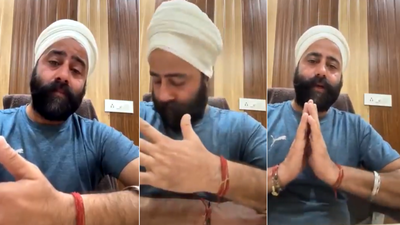
For today’s students, particularly those in their final year, the classroom is closely linked to the question of what happens after graduation.“A student may come because he is confused about an internship, worried about placements or simply doesn’t know how to deal with something happening at home. We try to listen, but there is a limit to what a subject teacher can realistically handle,” Prakash, a college faculty member at an engineering college says.From the student’s perspective, the final year can feel like a race against time, with academic requirements running alongside internships, placements and preparations for entering the workforce.Pranav Vats, a final-year Computer Science and Engineering student in Bengaluru, describes what students prioritise:“Whenever a guy comes to a college, he eventually wants to get placed. He doesn’t want to get a 9 plus CGP every semester. He just wants to get placed in a good company and do well in his career financially and also growth-wise… I have been doing internships from the first year itself. And whatever interviews I have been going through, nobody asked me about what my CGPA is. Everybody just asked, okay, how much do you know, how much practical skills you have, and how well you understand the market and how well do you understand your business in which you are going to work now.”That shift creates a difficult balance for teachers. Students may see practical experience as more directly connected to employment, while faculty members remain responsible for ensuring that students complete prescribed courses, credits and attendance requirements.
When attendance collide with career
The tension becomes particularly visible during placement and internship season.Pranav describes a situation in which he had secured an internship opportunity in Pune after clearing an interview:“Two, three months back, I got an interview. I’ve cleared it. I went to Pune. And at that time, I got permission from college. They gave me this letter of acknowledgement that you can go and pursue your six months internship, and all. But all of a sudden, after two months, they are saying that no, you have to fulfil your academic requirements and all… This company is very good. I’m doing very well there. And they are giving me the PPO for it. I could have got placed. But right now, this company is not giving away. College is saying that you have to attend weekly once class. As a student, it is not possible for me to come from Pune to Bangalore every week to attend some stupid class that is not even relevant to my coursework, which is not even relevant to my computer science degree… It is just an open elective subject.”He says discussions with his mentor, department head and other authorities did not resolve the problem.“What they said to me is, ‘No, do you want your graduate certificate or you want your internship certificate? So fulfill your graduation thing first, then you go and do whatever you want to do.’ They just want, basically, to fulfill what the college needs. And apart from that, you can do whatever you want to do. We don’t care.”Pranav says similar situations have affected other students, including those with jobs or internships in Bengaluru itself.He says, “There is this one guy who got placed in Nokia in Bangalore itself. And he said, ‘Sir, I can’t attend this class this week because I’ve got placed here at Nokia.’ They said, ‘You have to do it. I don’t care. You have to fulfill this academic thing’.”For teachers, however, understanding the student’s situation does not necessarily mean being able to change the rule.“The final year is particularly difficult because everything seems to happen at once. Students are completing projects, dealing with attendance and examinations, and at the same time worrying about placements and what they are going to do after graduation. You can see that pressure building up, especially when a student’s plans don’t work out,” the faculty said.The faculty member explains the dilemma:“There are situations where a student gets an internship or an opportunity outside the college and genuinely needs flexibility. As a teacher, you may understand why that opportunity matters to him. But you are also responsible for implementing the academic requirements. That can put the teacher in an uncomfortable position because you may sympathise with the student without having the authority to change the rule.”
Teacher becomes institutional buffer
The teacher is therefore often caught between three sets of expectations.The administration expects attendance, syllabus completion and documentation for institutional requirements. Students expect empathy, career guidance and flexibility. Parents expect academic performance, safety and career outcomes.The teacher may have to explain an institutional decision to a student without having any authority over that decision.“Sometimes the student is upset with the institution, the parents are worried about the student’s performance and the department is concerned about academic requirements,” the teacher explains. “The teacher ends up sitting in the middle. We are expected to explain one side to the other, even though we may not have control over the decision ourselves.”For students, this can reinforce the perception that teachers are primarily there to enforce attendance and award marks.Pranav puts it bluntly, “They don’t care, they just want these things to attend classes, they want attendance, they want marks, that’s it… If you go to an off-campus thing, where majorly everybody is applying right now, nobody asks you about your CGPA. They just want you to have your practical skills. But this CGPA thing or whatever coursework they are teaching us in college, it is not even relevant to what we will work in our offices.”
When personal problems enter classroom
The pressure is not limited to academics and placements.Teachers are also increasingly expected to recognise when students are struggling emotionally, even though they may not be trained to provide professional mental health support.“You spend enough time with a class to notice changes,” the faculty member observes. “If a student who is normally interactive suddenly stops speaking, misses classes or stops submitting work, you notice it. The difficult part is deciding whether to ask, ‘Is everything okay?’ because you don’t know whether the student wants you to enter that part of his life,” Prakash say.The teacher describes the boundary involved, “There is a very fine line between being concerned about a student and becoming intrusive. If I ask too many questions, it may seem intrusive. If I don’t ask anything, I may miss something important. Teachers are constantly trying to judge where that line is.”At the same time, faculty members recognise their own limitations.“I want my students to know that they can approach me, but I also have to be honest about my limitations. I can listen, I can help them think through a problem and I can direct them towards the right person. But I am not trained to provide therapy, and pretending otherwise can be harmful,” Prakash says.
Counselling gap, a stigma problem
Many institutions have counselling cells or mentor-mentee systems, but having a service does not necessarily mean students will use it.Pranav says his mentor-mentee system is largely focused on academic issues:“For every 20 or 30 sets of people there is assigned one mentor. So whatever the issues you have regarding the college, you can talk with them and they can get a resolution about it… [But] there is nothing like that through which we can discuss our career… They are strictly for the subject.”He says students also face peer pressure around seeking counselling.“We have one basically like they have hired a person… if you have any emotional issues or something like that, then you can go schedule a session,” Pranav says. “[But] if you suppose you go to a counsellor there is this peer pressure. If you go to a counselor, or maybe you’re discussing things with the teacher, you would seem like a weak person.”“This thing is very very disturbing to the students and nobody talks about it because everybody feels that okay, if I talk about it I can feel weak about it and people will think that okay he’s not mature enough to deal with his own problem on his own… I talk to some of my friends about it who are eventually on the same path… but majorly I work with my pressure on my own,” Pranav adds.When behaviour changes significantly, teachers also have to balance intervention with confidentiality.“If I feel that a student’s behaviour has changed significantly, I cannot just say, ‘That’s his personal matter.’ There are situations where you have to involve the appropriate support system. But you also have to be careful about confidentiality and about not turning a student’s difficulty into a public issue,” Prakash says.
Emotional burden on teachers
While student stress receives increasing attention, the pressure on faculty can remain largely invisible.A teacher managing a class of 80 to 120 students may also have to deal with staff shortages, administrative work, evaluations, meetings and institutional documentation. A difficult conversation with a student does not necessarily end when the class does.The faculty member says teachers need institutional support if they are expected to take on these additional responsibilities.Prakash says, “I don’t think teachers are unwilling to take on a larger role. Most teachers care about what happens to their students. But if the expectation is that we should identify emotional distress, provide career guidance, handle academic problems and support students through personal crises, then the institution also has to give teachers training and a proper support structure.”
Share your thoughts in the comments
Be respectful · TOI community guidelines
Beyond the classroom
The experiences of both students and teachers point to a larger structural problem.When colleges rely on individual teachers to enforce academic rules, handle administrative requirements, guide students through careers and respond to emotional distress, the teacher becomes the point where multiple pressures meet.The solution therefore cannot rest entirely on individual faculty members.As colleges respond to changing job markets and rising student pressures, the system would require clearer boundaries for faculty responsibilities, greater flexibility for final-year students navigating legitimate career opportunities, and stronger professional support systems.For the teacher standing at the front of the classroom, the challenge is no longer simply teaching the subject. It is managing everything that happens around it, often without the authority, time or institutional support required to do so.