
Researchers at the National Institute of Technology (NIT) Rourkela have developed an electrochemical process to recover struvite, a slow-release fertiliser, from human urine. The research explores an alternative method of recovering phosphorus and other nutrients from waste rather than relying entirely on industrial fertiliser production.The findings, published in the Journal of Water Process Engineering, describe a process that uses electricity and magnesium electrodes to extract nutrients from urine. According to the institute’s press release, laboratory experiments recorded phosphorus recovery efficiency of more than 98% in a 5-litre reactor and over 91% in a larger 35-litre reactor.
How the electrochemical process works
Phosphorus is one of the three primary nutrients in nitrogen-phosphorus-potassium (NPK) fertilisers, alongside nitrogen and potassium. Conventional fertiliser manufacturing requires substantial energy and involves significant production costs.Existing methods of recovering nutrients from urine often rely on chemical precipitation, which requires additional alkaline chemicals and external magnesium salts. The NIT Rourkela team developed an alternative using magnesium electrodes.When an electric current passes through the urine, the magnesium electrodes gradually dissolve and release magnesium ions. These ions react with substances present in the urine to form struvite, which can be used as a slow-release fertiliser.Explaining the approach, Professor P. Balasubramanian, Associate Professor in the Department of Biotechnology and Medical Engineering, said, “Our electrochemical process offers a sustainable and chemical-free route for nutrient recovery. By using a sacrificial magnesium anode, we can generate the required magnesium ions in situ, eliminating the need for external chemical addition and enabling precise control over the precipitation process.“
Researchers address electrode sludge accumulation
One of the challenges identified during the development process was the accumulation of sludge on electrode surfaces. These deposits can interfere with electricity transfer, slow chemical reactions and reduce system efficiency.To address this issue, the researchers introduced a reverse polarisation technique. The method periodically reverses the direction of electric current to remove deposits and maintain the dissolution of magnesium into the urine.The experimental setup was tested using two reactors with working volumes of 5 litres and 35 litres. The urine samples were collected from male urinals.
Phosphorus recovery exceeds 98% in laboratory testing
The researchers reported phosphorus recovery efficiency exceeding 98% in the 5-litre reactor. The larger 35-litre reactor achieved recovery efficiency above 91%.The recovered material was identified as struvite through X-ray diffraction (XRD) and Fourier-transform infrared spectroscopy (FTIR).The team also evaluated the recovered fertiliser using basil, cowpea and okra plants. Its performance in supporting plant growth was found to be comparable to commercially available NPK fertilisers.
Economic viability requires further integration
The research team’s techno-economic assessment identified limitations in recovering struvite alone. According to the press release, the process was not economically viable when operated independently in the 35-litre reactor because of high operating costs.However, integrating additional nutrient recovery processes, including ammonium sulphate recovery, improved the financial assessment.A 500-litre pilot-scale integrated system recorded an estimated payback period of 6.55 years and an internal rate of return of 13%.
Further research planned
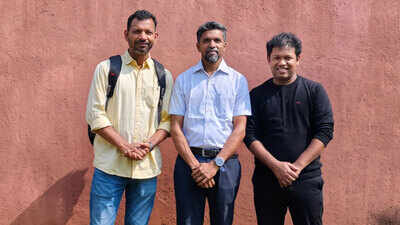
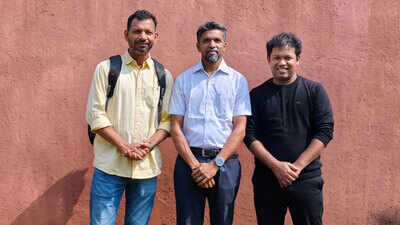
The researchers plan to investigate continuous-flow electrocoagulation systems, conduct field trials using struvite-based fertiliser and explore technology upgrades for green hydrogen recovery. A comprehensive life cycle assessment is also planned to evaluate the environmental implications of the process.The study was co-authored by Professor P. Balasubramanian, Professor Sivaraman J., Assistant Professor Bikash Chandra Maharaj and research scholar Alisha Zaffar from NIT Rourkela’s Department of Biotechnology and Medical Engineering.