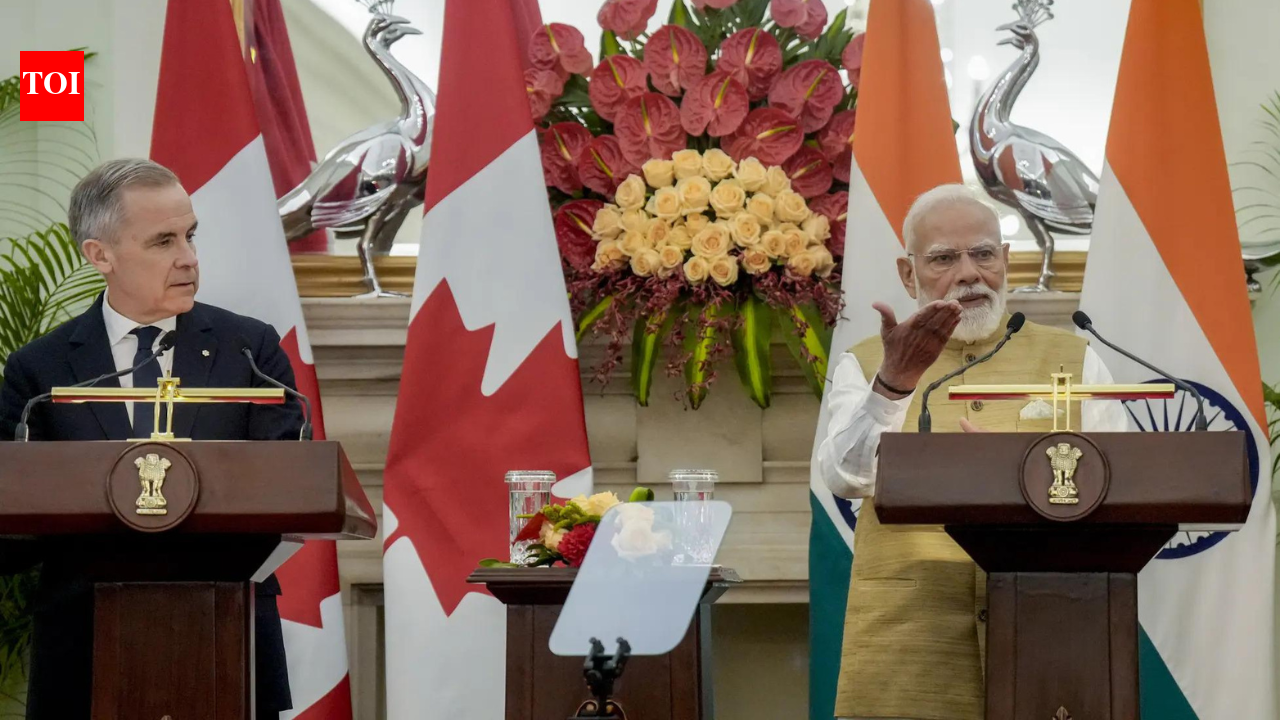
NEW DELHI: After condemning the attacks on the UAE, PM Narendra Modi spoke to the leaders of Saudi Arabia and Bahrain Monday to condemn the military strikes by Iran in these countries too, signalling deep disapproval of Tehran’s indiscriminate targetting of Gulf countries even though he didn’t name Iran. In the wee hours on Monday, the PM had spoken to his Israeli counterpart Benjamin Netanyahu to stress the need for an early cessation of hostilities. The West Asia situation came up in his meeting with Canadian PM Mark Carney too, with Modi saying in his media remarks later that India will continue to work with countries to protect all Indian citizens in this region. The PM, who also spoke to Jordan’s King Abdullah II to convey India’s concerns and express solidarity, discussed the well-being of Indian community in all his conversations, as concerns about their safety were exacerbated over reports of first Indian casualty in an attack on an oil tanker off Oman’s coast.
India has always called forpeace and tranquility: PM Modi “India’s thinking about many tensions going on in the world has been clear. We have always called for peace and tranquillity. And when two democracies stand together, the voice of peace becomes even stronger,” said Modi, after his meeting with Carney, adding that the West Asia situation was a matter of deep concern to India. In his talks with Netanyahu, Modi conveyed India’s concerns over recent developments and emphasised the safety of civilians as a priority. The Israeli PM was quoted by news channels as saying he thanked Modi for standing with Israel. “India condemns the recent attacks on Saudi Arabia in violation of its sovereignty and territorial integrity. We agreed that earliest restoration of regional peace and stability is of utmost importance. I thanked him for looking after the well-being of the Indian community in these difficult times,” said Modi in a post on X, after his talks with Saudi Crown Prince and PM Mohammed bin Salman. Modi also condemned the attacks on Bahrain saying India stood in solidarity with its people in this difficult hour. He thanked both leaders for looking after the Indian community. Modi’s condemnation of the Iranian attacks, after the initial response by India on Saturday that was restricted to calling upon all to respect the sovereignty and territorial integrity of all states, is a reflection of the fact that India’s strategic interests are aligned more with the GCC countries than with Iran. India has so far neither condemned the attacks on Iran nor expressed condolences over the killing of its supreme leader Ali Khamenei. For India, it’s imperative to work with the Gulf countries to ensure the well-being of a nearly 10-million strong diaspora, a major source of remittances, and also to ensure its energy security. Connectivity, defence, maritime security and supply chain resilience are other areas where India is working closely with the Gulf countries. Modi has himself led the outreach to the Gulf that has resulted in deepening ties with the region in the past decade, outpacing its relations with others. External affairs minister too had spoken to his counterparts from all 6 GCC countries after the war broke out on Saturday, expressing concern and highlighting India’s stakes in regional stability and the welfare of the Indian community. However, he had not condemned the attacks.