
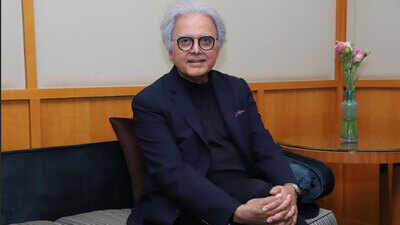
Are Indian business schools preparing students for a world shaped by artificial intelligence, rapid technological change and shifting workplace expectations? And are they drawing enough from India’s own experiences, businesses and knowledge traditions, rather than relying predominantly on imported frameworks?These were among the issues discussed by Harvard Business School (HBS) professor Rohit Deshpande during a recent visit to Mumbai, where he led a workshop for doctoral students from business schools across India, hosted by the HBS India Research Center in partnership with Harvard Business Impact.In a conversation with Hemali Chhapia, Prof Deshpande spoke about participant-centered learning, the need for more India-focused case studies, the future of MBA education in an AI-driven economy, and why creativity, rather than routine analytical work, may become the defining skill of tomorrow’s management graduates.India’s MBA classrooms have long been built around the needs of faculty and institutions. Is it time to rethink how management education is delivered, and make the learning process more relevant to the needs of students and industry?So, two answers, one is non-India specific, I just think that we need to take the emphasis away from teachers and put the emphasis on students. Philosophically, we call it participant-centred. We need to be more focused on participants; in theatre we call it the fourth wall; we need to break down that fourth wall.So, I think that’s true everywhere. I mean, we work with people. I work with professors from 40 different countries in the program we run, and it’s the same thing. They have all grown up with lectures, and they are now lecturers themselves, so breaking out of that is very, very difficult for people. They are uncomfortable with that. And to be India-specific, that goes to the content of materials that can be used. So, I don’t know if you know this, but for Harvard Business Impact, for Harvard Business Publishing, the largest market for their materials is South Asia. Why? Because it’s anglophone, and the majority of their material is in English. So, it’s much easier in India than if you were trying to do this in Japan; we’ve got to translate the material. So, I think India and in South Asia more generally, this participant-centered learning approach lends itself to work better in terms of available classroom material.Which brings me to a broader question. Has Indian management education, in many ways, failed to look inward? Do you think we don’t draw enough from India’s own civilizational knowledge, rural economies, family businesses and grassroots enterprises?So, the two categories to a class are “process” and” content”. I think that the process part is more important than the content. Because there’s a lot of content that’s out there, people are lecturing the content. So, for instance, 80% of the case studies used in business schools around the world come from Harvard. When I’ve gone to other universities to see our material being taught, they lecture the cases; they use a case as a “best practice example” of a concept that they’re lecturing on. I mean, that’s not how the case is supposed to be taught. So, the process is really what’s important. It is how the case is taught.Then on content, what’s the point of teaching something that’s happening with some large firm in the US? Relevance becomes an issue. In order to get participants into learning, you need relevance; you need people to be able to connect with that, with them, with their lives.I think we need to develop more local content. And I’m sure that if you ask students, they will say: “Why are we studying US cases?” We want local cases, but having said that, it’s tough to build the infrastructure to develop cases because there’s no incentive system in place for it.Increasingly, incentive systems at business schools across the world are to give greater weightage to research and publication in the top technical journals, rather than on teaching materials. And so, it’s easier for people just to use off-the-shelf materials, if they’re going to use cases, which means they come from the US, and they’re using stuff that’s primarily about Western companies. And incidentally, it goes the other way also; if we can develop interest in India by the rest of the world, that would be a contribution to learning everywhere.I’ll give you a personal example. Years ago, I developed a case study on the bravery of the staff at the Taj Mahal Palace Hotel. Anjali Raina, Executive Director of the HBS India Research Center, and I then wrote an article about it titled “The ordinary heroes of the Taj.” I did it for the very specific purpose of talking about what happened, who these heroic hotel staff are, how they were recruited and trained, and what the culture is, etc.An unintended development is that when I am teaching this in the US, a lot of people don’t understand the context; they have never been to India, they have never been to a Taj hotel. So, it was actually explaining Indian culture to people who haven’t been to India. So, it works that way as well. So I think we need more local content.In an AI-driven economy, where analytical, reporting and even decision-support tasks are increasingly being automated, what are the capabilities that will continue to distinguish a young MBA graduate?I think this puts an emphasis on creativity versus routinisation. The tasks that AI is taking over are routinisable tasks, so we need to get people to think more about creative ideas, doing things that large learning models cannot handle. So, I’ll give you an example from another class that I teach at Harvard. It’s on the business of art. We talk about “values” creation rather than value creation, since art is about values that are created across civilizations and generations and passed on. Mahabharata, Ramayana, the Vedas, these classics that have been around for a long time. For me, that’s something less routinisable, whereas more routinizable are scientific machine tasks. So I think we need to go more in the direction of freeing the human spirit.So, has Harvard Business School redesigned its MBA curricula for first-year students after AI became commonplace?At Harvard Business School, we now have a required first-year course called DSAIL, Decision Science and AI for Leadership. AI has crept into the curriculum of all our courses. I teach a course on ethical leadership, and we talk about the ethics of AI in that course. So, yes, we are changing our curriculum; we don’t want people to be AI naive; we want them to go out into the work world understanding how you can use technology in an intelligent way, to go from AI naïve to AI native.