
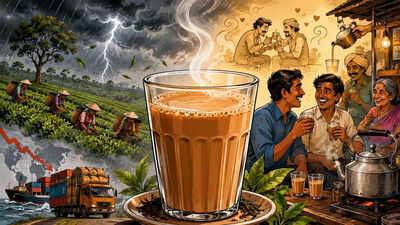
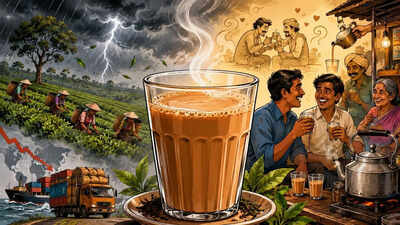
Every morning across India, millions of hands instinctively reach for the same comfort before the day truly begins — a steaming cup of chai.At railway stations, tea stalls and office canteens, conversations begin over tea long before breakfast is served. In homes, the familiar sound of boiling milk and tea leaves often becomes the soundtrack of dawn itself.Long before energy drinks, protein shakes and artisanal coffees became lifestyle statements, India had already perfected its own daily ritual.It is the pause before work begins. The excuse for difficult conversations. The unofficial fuel of newsrooms, political meetings, family gossip, exam preparation and endless train journeys.Entire friendships, business deals and election strategies have unfolded over cups of chai.In short, tea in India is more than merely a beverage. It is habit, hospitality, memory and emotion poured into a cup.According to official data, India consumes nearly one-fifth of the world’s tea output and remains among the world’s largest tea producers and exporters.Yet this International Tea Day, celebrated globally on May 21, India’s tea industry finds itself standing at a difficult crossroads.The theme for this year, ‘Sustaining Tea, Supporting Communities’, reflects the dual reality of the sector, sustaining a fragile yet vital industry while supporting millions whose livelihoods depend on it.Behind the warmth of every cup lies a story increasingly shaped by climate stress, geopolitical tensions, rising household costs and a rapidly changing global economy.
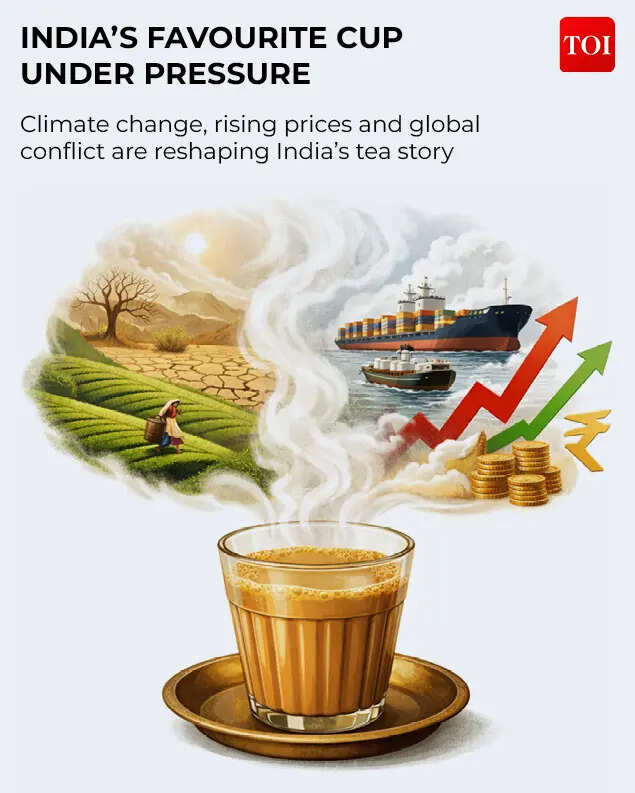
Your teacup is no longer insulated from the pressures reshaping the modern world.And yet, despite all the disruption, chai remains one of the few rituals India still collectively understands.
Beverage part of Indian identity
Tea may not have originated in India but few countries absorbed it into daily life as deeply as Indians did.Introduced commercially by the British in the 19th century after discovering tea-growing potential in Assam, the beverage gradually travelled from colonial plantations into ordinary households. Over decades, Indians transformed tea into something uniquely their own.The British largely drank it plain. Indians added milk, sugar, ginger, cardamom, cloves and regional variations that changed from one state to another.Today, tea in India is simultaneously a roadside drink, a luxury export, a worker’s break, a hospitality ritual and also a multi-billion-dollar agricultural industry.It cuts across class, language and geography in a way few things do.A Rs 10 kulhad chai at a railway station and a Rs 600 single-estate Darjeeling brew inside a luxury hotel may technically come from the same plant — Camellia sinensis — but they represent entirely different worlds.Yet both remain deeply Indian.The country produces a vast variety of teas. From Assam’s strong liquor tea to Kashmiri kahwa, Kolkata’s bhaar chai, Mumbai’s cutting chai and Nilgiri brews from the south, tea has evolved into a cultural language of its own.But the emotional connection often matters more than statistics.The phrase “chai pe charcha” became part of political vocabulary. Office canteens still function around tea breaks. Train journeys feel incomplete without paper cups passed through crowded windows. Even today, countless friendships, romances, business deals and political arguments across India begin with a simple question: “Chai loge?”But behind the cup, the industry is under stress this year.While India’s emotional relationship with tea remains strong, the industry behind it is showing signs of strain.
Difficult year for tea gardens
India remains the world’s second-largest tea producer after China and among the biggest tea exporters globally.India’s major tea-growing regions are spread across Assam, West Bengal, Tamil Nadu, Kerala and parts of the northeast, sustaining millions of livelihoods across plantations, factories, transport chains and small roadside stalls.But 2026 has started on a worrying note for the industry.According to the Indian Tea Association’s latest report, India’s total tea production during January-February 2026 fell sharply to 31.15 million kg from 42.12 million kg during the same period last year, a decline of more than 26%.The fall has been particularly severe in North India.
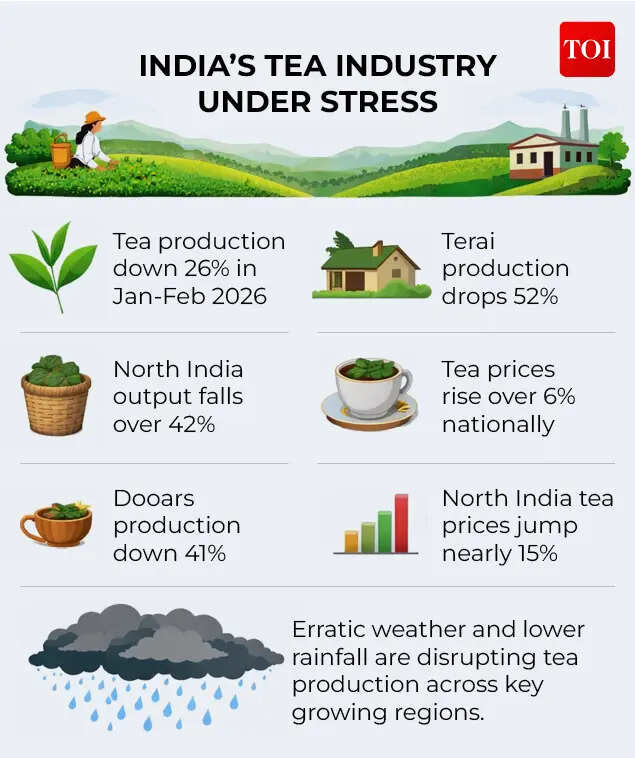
Production in North India dropped by over 42%, while the Dooars and Terai regions of West Bengal recorded declines of more than 41% and 52% respectively. Assam Valley production also slipped significantly.Industry bodies and plantation experts have increasingly linked these disruptions to erratic weather patterns and insufficient rainfall.Tea is an extremely climate-sensitive crop. Even slight changes in rainfall, temperature and humidity directly affect leaf quality, flavour and harvest cycles.In Assam and North Bengal, plantation managers have repeatedly warned that delayed rainfall and rising temperatures are beginning to alter long-established cultivation rhythms.The tea economy also supports millions of plantation workers and small growers whose incomes often fluctuate directly with weather disruptions, production losses and export volatility.For generations, tea gardens functioned according to predictable seasonal cycles. Today, that certainty is fading.The changing climate is now quietly reshaping not only India’s tea economy but also the future taste and availability of the country’s most consumed beverage.
Humble cup of chai becoming costlier
The pressure is not limited to plantations. For years, tea remained one of India’s most affordable daily comforts.That equation is slowly changing.For ordinary people, the daily cost of making tea is steadily increasing as multiple ingredients become more expensive simultaneously.Tea prices themselves have risen noticeably this year. Lower crop arrivals following erratic weather have also tightened supply, contributing to higher auction prices across several producing regions.According to the Indian Tea Association (ITA) report, average all-India tea prices between January and March 2026 rose by over 6% compared to last year. In North India, prices jumped nearly 15% in March alone.But tea leaves are only one part of India’s chai economy. Milk prices have also increased.Earlier this month, both Amul and Mother Dairy announced fresh price hikes across India, raising milk prices by Rs 2 per litre amid rising fuel, cattle feed and packaging costs.The hikes came at a time when Indian households were already facing broader inflationary pressure linked partly to global fuel uncertainty triggered by tensions in West Asia.LPG rates were also increased shortly after the Iran conflict began.For many middle-class and lower-income households, chai is not a luxury purchase. It is a daily necessity consumed multiple times a day by entire families.As a result, even small increases in tea, milk, sugar or cooking gas prices become immediately noticeable in household budgets.For small tea sellers also, who operate on razor-thin margins, higher procurement costs can quickly become difficult to absorb.India’s tea economy functions through an enormous informal network, street-side chai vendors, railway sellers, office canteens, local grocery stores, plantation workers, auction houses, transport chains, exporters, and small growers.When tea prices rise, the effect quietly spreads across this ecosystem.Roshan Kumar, who runs a roadside tea stall, told TOI that rising LPG prices had already disrupted his daily expenses, forcing him to increase the price of a cup of tea from Rs 10 to Rs 15. Now, higher milk prices have added further pressure on his small business.Hence, in many ways, the price of a cup of chai has quietly become a reflection of wider economic stress.
Tea exports now caught in global conflict
The tea industry is also facing a challenge far beyond its plantations — geopolitics.Notably, it has never been isolated from geopolitics.Historically, tea shaped colonial trade routes, imperial taxation systems and global commerce itself.Today, global tensions, supply chain disruptions and sustainability standards are again influencing the tea industry.One of the biggest concerns this year is the growing instability around the Strait of Hormuz, the narrow but strategically vital shipping route connecting the Persian Gulf to global markets.The ongoing tensions involving Iran and the broader West Asian conflict have triggered alarm within the tea export sector.According to the ITA, nearly 41% of India’s tea exports, around 115 million kg in 2025, were shipped to markets such as the UAE, Iraq and Iran through routes connected to the Strait of Hormuz.ITA president Shailja Mehta recently warned that any serious disruption to shipping through the strait could significantly affect Indian tea exports.India exported a record 281 million kg of tea in 2025, with the Middle East emerging as one of its most important markets. UAE alone imported over 50 million kg of Indian tea last year, while Iraq and Iran remained major buyers of premium Assam orthodox tea.Industry representatives now fear that prolonged instability in the region could lead to higher freight costs, rising marine insurance premiums, shipment delays, payment disruptions and supply-chain uncertainty.ITA vice-chairman Atul Rastogi recently noted that while the Russia-Ukraine conflict primarily affected African tea markets, the current West Asia crisis could directly impact Indian and Sri Lankan tea exporters.For exporters, the concern is not just commercial.Tea remains deeply woven into everyday culture across Gulf countries, especially Indian-origin orthodox tea varieties popular in Iran, Iraq and the UAE. Any prolonged disruption could therefore affect both producers and consumers across regions connected through decades of tea trade.It is a reminder that even something as ordinary as tea now travels through a world shaped by wars, sanctions and geopolitical fault lines.At the same time, sustainability concerns are becoming harder to ignore.Consumers increasingly want ethically sourced tea, better labour standards, environmentally sustainable cultivation and traceable supply chains.International Tea Day itself was created partly to raise awareness around the economic and social importance of tea workers and sustainable production. The United Nations formally designated 21 May as International Tea Day to promote sustainable tea production and improve conditions across the tea value chain.That conversation is becoming more urgent as climate risks intensify.Because the future of tea may depend not only on consumer demand but on whether plantations can survive rising environmental stress.
A changing tea market
Despite production challenges, another important shift emerging in 2026 is the gradual evolution of what India produces and exports.Some segments of India’s tea industry are showing signs of transformation.While traditional “Crush, Tear, Curl” (CTC) tea production and exports have declined sharply this year, orthodox and green tea segments have performed relatively better.CTC tea, the strong black tea used widely in Indian milk chai, remains dominant. But it is facing increasing pressure.The ITA report shows CTC production fell nearly 32% year-on-year during January-February 2026. CTC export volumes also declined significantly.Green tea, however, recorded production growth of almost 28%.Orthodox tea exports also remained comparatively resilient, helped partly by strong demand from Gulf and international premium markets.This shift reflects broader changes in global tea consumption.Consumers increasingly seek premium teas, healthier beverages, speciality blends, organic products and artisanal tea experiences.Countries such as Japan, the United Kingdom and the United States continue importing high-value Indian teas at premium prices. According to the ITA data, Japan paid among the highest unit prices for Indian tea exports in early 2026.In many ways, Indian tea now exists in two parallel worlds.One remains of the familiar cutting chai sold at crowded railway stations.The other is an increasingly premium global market where tea is marketed through luxury branding, health consciousness and boutique experiences.Young urban consumers in India are also experimenting beyond traditional chai with green tea, matcha and herbal infusions.Meanwhile, Indian tea brands are increasingly positioning tea not only as a commodity, but as a lifestyle and wellness product.Yet traditional milk chai still dominates India’s tea culture overwhelmingly.At roadside stalls, in crowded markets and on long train journeys, the small cutting chai continues to remain the country’s most democratic beverage.
Tea’s global battle against coffee culture
Globally, tea remains the most consumed beverage after water.Yet culturally, tea increasingly faces competition from the premiumisation of coffee.Café chains, cold brews, flavoured beverages and social-media-driven coffee aesthetics now surround urban millennials and Gen Z consumers across major cities.Tea has responded by reinventing itself.Matcha bars, artisanal loose-leaf brands, bubble tea chains, wellness teas, kombucha products and luxury single-origin teas have transformed tea from an everyday commodity into a lifestyle category for younger consumers.India too is witnessing this transition.Speciality tea cafés, direct-to-consumer tea startups and premium organic brands are growing steadily, especially among health-conscious urban buyers.Health remains one of tea’s strongest advantages.It contains anti-inflammatory and antioxidant properties and is associated with several wellness benefits.Green tea, herbal infusions and immunity-focused blends saw a major boost after the Covid-19 pandemic and continue to remain popular in urban markets.But despite these modern reinventions, traditional chai still dominates India emotionally.Because unlike coffee culture, tea culture in India remains collective.It is social before it is aspirational.
Emotional bond India has with tea
Perhaps what makes tea unique in India is that its significance goes far beyond economics.It remains deeply embedded in India’s social fabric, from office canteens to roadside tea stalls.In many parts of India, offering tea to a guest remains one of the simplest expressions of warmth and hospitality.Even during crises, tea often becomes associated with comfort and normalcy.During the Covid-19 lockdowns, countless Indians rediscovered home-brewed chai rituals while confined indoors. For many, the act of making tea became therapeutic amid uncertainty.Also, there may be no institution more uniquely Indian than the roadside tea stall. Every Indian city has them.Outside courts and colleges. Beside hospitals and bus stands. Near television studios and government offices.Tea stalls function as miniature public forums where cricket debates, stock market discussions, election gossip and neighbourhood rumours blend into steam rising from aluminium kettles.This emotional relationship partly explains why even small changes in tea prices or availability generate strong public reaction.Tea is not merely consumed in India. It is lived.
The future of India’s tea story
The Indian tea industry now stands at a crucial transition point.Climate change is affecting cultivation cycles. Global conflicts are threatening export routes. Rising costs are squeezing both consumers and producers. At the same time, global demand patterns are evolving rapidly.Yet tea continues to remain one of India’s strongest agricultural and cultural symbols.India’s tea exports still command strong international demand, especially in premium orthodox varieties. Countries like the UAE, Russia, the United Kingdom and the United States remain major buyers of Indian tea.The government and industry are also pushing greater focus on value-added tea exports, speciality teas, branding, domestic manufacturing and premiumisation.Meanwhile, small tea growers, plantation workers and exporters continue adapting to increasingly uncertain conditions.Their struggle reflects a larger truth about the modern world.Even the most ordinary daily rituals are no longer untouched by climate pressures, inflation, global conflicts and shifting geopolitics.And perhaps that is what makes tea such a powerful symbol today.Inside every cup now lies not just flavour or comfort but the story of a changing world itself.
Yet chai continues to survive every change
Despite all the uncertainty, chai possesses something many industries do not: emotional permanence.In purely economic terms, tea is a global commodity but here in India, it remains something more intimate.Tea marks routine.Morning tea before newspapers arrive. Evening tea during monsoon rain. Tea after funerals. Tea during weddings. Tea offered to guests before conversations even begin.Very few beverages move so naturally across moments of grief, celebration and routine.And perhaps that explains why tea has survived every modern transition thrown at it. It survived colonial rule, economic liberalisation, coffee chains, changing diets and the rise of digital lifestyles because, in India, tea was never only about taste.Students still gather around tea stalls outside coaching centres while office workers continue escaping for quick chai breaks during stressful days.That may also explain why International Tea Day feels especially relevant in 2026.Because this year, the story of tea is about far more than just beverage consumption. It is about climate pressures, livelihoods, shifting global markets, changing consumer behaviour and the quiet resilience of an industry that continues to survive despite mounting challenges.And somewhere between the first sip and the final empty cup, tea continues to do what it has always done best:Slow people down just enough to talk, argue, reflect, complain, laugh and connect.Somehow still capable of bringing people together in ways few things can.