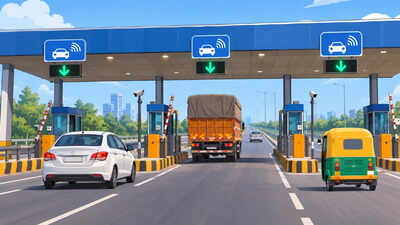
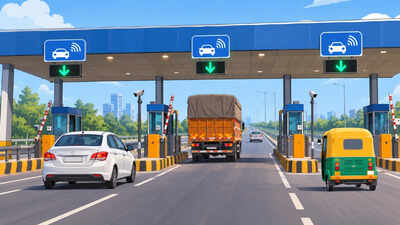
Living within 20 km of a National Highway toll plaza could now mean lower toll expenses for motorists. From November 1, 2026, eligible owners of non-commercial vehicles can obtain a Concessional Local Pass for an annual fee of Rs 1,500 at toll plazas outside municipal or local town limits, and Rs 3,000 at those within these limits, according to the Ministry of Road Transport and Highways.But simply living nearby does not guarantee eligibility. The scheme requires motorists to have a valid and functional FASTag, restricts the pass to a specific toll plaza and excludes highways and expressways operating under a closed user-fee collection system. It also rules out issuance where a service road or alternative road is available to commuters.The concession comes as India continues to expand its highway network and transition towards electronic toll collection. While FASTag has reduced dependence on cash payments and cut waiting times at toll plazas, operational challenges persist, prompting the government to introduce further changes to the system.
The need for FASTag: India’s highway boom and the push for seamless travel
India’s National Highway network has expanded significantly over the past decade, making efficient toll collection increasingly important. The network grew from 91,287 km in financial year 2013-14 to 1,46,572 km in March 2026, according to an infrastructure factsheet released by the Press Information Bureau (PIB) in August 2026.
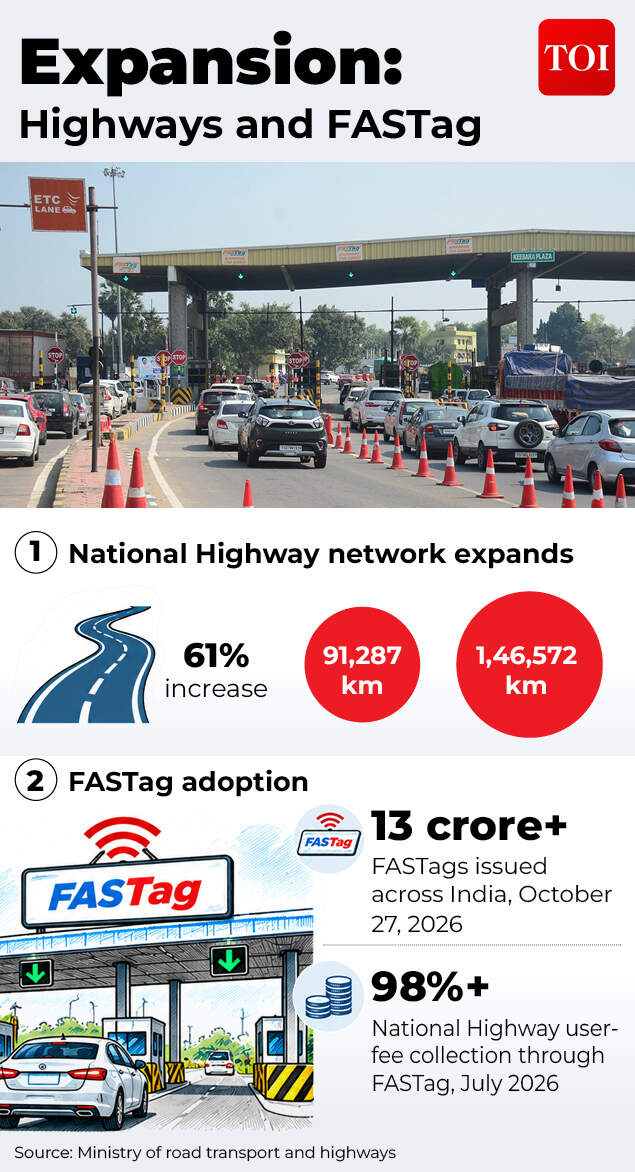
India’s highway network rapidly grew over the years; so did FASTag
As highways and expressways multiply, ensuring uninterrupted traffic movement has become critical. Long queues at toll plazas can undermine the very benefits that faster road infrastructure is meant to deliver, particularly during peak travel periods.Before electronic toll collection became widespread, motorists had to stop at toll booths and pay manually. This often meant long delays, higher fuel consumption from idling vehicles and increased pollution. Cash handling also made toll collection more dependent on physical transactions and records.The government introduced electronic toll collection to address these bottlenecks.FASTag uses Radio Frequency Identification (RFID) technology. A tag affixed to a vehicle’s windscreen communicates with electronic readers at toll plazas, enabling the applicable fee to be deducted from the linked account without requiring motorists to pay cash at the booth. The ministry documented the launch of electronic toll collection on the Delhi-Mumbai corridor on October 31, 2014, describing FASTag as a passive RFID tag.The system was subsequently rolled out across National Highways. From midnight on February 15-16, 2021, all lanes at National Highway fee plazas were designated as FASTag lanes, according to the ministry’s year-end review.Adoption has grown substantially since then. In its October 27, 2026 announcement on the new local pass, the ministry said more than 13 crore FASTags had been issued across the country. A separate Rajya Sabha reply dated July 22, 2026, stated that approximately 98% of National Highway user-fee collection was being carried out through FASTag.The transition has created a digital trail of toll transactions, reduced dependence on cash collection and improved transparency and accounting in the process.
The challenges: What FASTag solved, and what it couldn’t
FASTag addressed several problems associated with conventional toll collection, particularly queues and delays caused by cash transactions. Automatic deductions helped reduce the time vehicles spent at toll booths.Road Transport Minister Nitin Gadkari said in June 2023 that waiting time at toll plazas had fallen from 734 seconds in 2014 to 47 seconds in 2023 following the introduction of electronic toll collection.However, digitising payments has not eliminated operational problems. Motorists continue to encounter issues involving FASTag activation, insufficient account balance, damaged or improperly affixed tags and failed transactions.In January 2026, the National Highways Authority of India (NHAI) announced changes to the Know Your Vehicle (KYV) process for car-category FASTags, acknowledging that post-activation verification requirements had caused inconvenience and delays. The authority also cited complaints involving loosely affixed tags, incorrect issuance and misuse.Disputes over incorrect deductions have also necessitated dedicated grievance-redressal mechanisms. A July 2026 parliamentary reply listed the National Highway helpline 1033, issuer-bank helplines, the Rajmargyatra app and a dedicated email address as channels through which motorists can lodge complaints.Another persistent concern involves residents living close to National Highway toll plazas. Even as FASTag has made toll collection quicker, people who regularly cross a nearby plaza on short journeys continue to face recurring toll expenses.The existing monthly local-pass arrangement was designed to address this problem. In August 2026, NHAI announced that online subscriptions for monthly local passes had been extended to 121 toll plazas through the Rajmargyatra app. The new annual concession builds on this facility, offering eligible residents another option.
What changes: New FASTag rules, cheaper local passes and the catch
The government has introduced the Concessional Local Pass for eligible owners of non-commercial vehicles residing within 20 km of a National Highway fee plaza. The provision was notified through the National Highways Fee (Determination of Rates and Collection) (Fifth Amendment) Rules, 2026, under the National Highways Act, 1956.
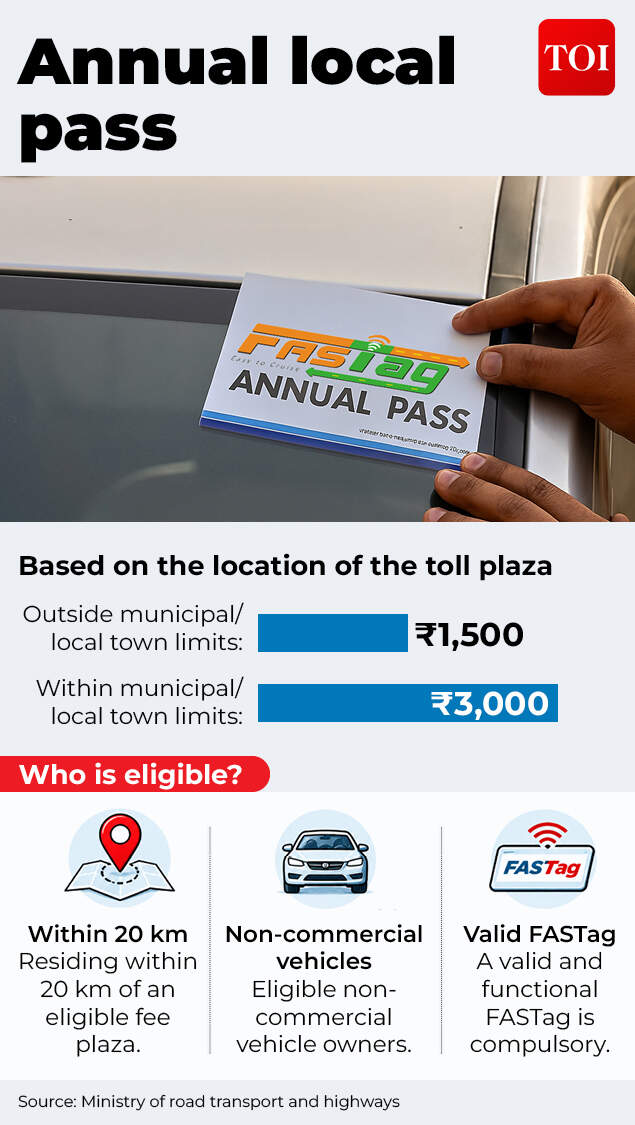
Eligibility for the annual local pass.
According to the ministry’s October 27 announcement, the scheme came into effect on November 1, 2026, with two annual fee structures depending on the location of the toll plaza.Motorists using fee plazas outside municipal or local town limits will have to pay Rs 1,500 annually. For plazas located within these limits, the annual fee has been fixed at Rs 3,000.To qualify, applicants must own an eligible non-commercial vehicle, reside within the specified 20-km radius and possess a valid and functional FASTag. Commercial vehicles are excluded.Eligible motorists can choose between the existing monthly local pass and the new concessional annual pass. However, the annual pass is valid only at the specific toll plaza for which it is issued. It cannot be used at other plazas along the same highway or elsewhere on the National Highway network.
Why living within 20 km may not be enough
The new rules contain additional exclusions that could deny eligibility even to residents who meet the distance requirement.The first applies to National Highways and expressways where toll collection operates under a closed user-fee collection system. The ministry has clarified that the concessional local pass will not be available on these stretches.The second exclusion concerns toll plazas where a service road or alternative road is available for commuters. According to the ministry’s announcement, the annual local pass will not be issued in such cases.In other words, residential proximity alone is not enough. The toll collection system in operation and the availability of alternative roads will also determine eligibility. However, the PIB announcement does not spell out how authorities will assess the availability of alternative roads or resolve disputes involving residential distances and municipal boundaries.The pass is also restricted to the designated toll plaza and cannot be used at other locations. The government has retained the power to revise the annual rates, with any revisions taking effect from April 1 each year.
When can motorists obtain the pass, and how is it different from the FASTag Annual Pass?
The ministry has said that the new annual local pass will be available at eligible toll plazas from November 1, 2026. Motorists will also be able to obtain it through the Rajmargyatra app from December 1, 2026.The new concession should not be confused with the separate FASTag Annual Pass introduced in August 2025. The latter is available to non-commercial cars, jeeps and vans and follows a different fee structure and coverage arrangement.For financial year 2026-27, the FASTag Annual Pass costs Rs 3,075 and remains valid for one year or 200 fee-plaza crossings, whichever comes first. It covers approximately 1,150 National Highway and National Expressway fee plazas, according to NHAI’s rate-revision announcement.The distinction is important. While the FASTag Annual Pass offers wider geographical coverage, subject to a limit on crossings, the new Concessional Local Pass is meant specifically for residents living within 20 km of an eligible toll plaza and can be used only at that location.The actual savings under the new scheme will depend on the existing monthly-pass rate at the particular toll plaza and how frequently a motorist uses it. The two annual-pass arrangements therefore serve different purposes and should be assessed separately.
The future: From FASTag to satellite-based toll collection
Even as FASTag remains the backbone of electronic toll collection on National Highways, the government is exploring technologies that could eventually allow motorists to be charged according to the distance they travel.One such technology is the Global Navigation Satellite System (GNSS)-based toll collection system. It uses satellite-based positioning to determine a vehicle’s location and track its movement along designated highways. The applicable user fee can then be calculated according to the distance travelled, rather than relying solely on vehicles passing through conventional toll plazas.This is fundamentally different from FASTag, which primarily relies on RFID communication between a vehicle-mounted tag and electronic readers at tolling points. GNSS-based tolling could eventually enable distance-based charging and reduce the need for physical toll barriers.However, satellite-based toll collection has not replaced FASTag in India. In a July 2026 reply to the Rajya Sabha, the Ministry of Road Transport and Highways said expert committees had recommended further deliberations on GPS-based barrier-free tolling, citing concerns over security, privacy, data breaches and operational control. The response did not specify a nationwide implementation timeline.Meanwhile, the government is advancing Multi-Lane Free Flow (MLFF) toll collection, which allows vehicles to pass through tolling points without stopping at conventional barriers. Unlike GNSS-based tolling, MLFF can continue to use existing FASTag technology.
Share your thoughts in the comments
Be respectful · TOI community guidelines
The system combines Automatic Number Plate Recognition (ANPR) cameras, artificial intelligence-based analytics and FASTag-enabled RFID technology to identify vehicles and collect the applicable toll.The two technologies represent different approaches to seamless toll collection. MLFF aims to eliminate the need to stop at toll barriers while retaining electronic identification and payment mechanisms such as FASTag. GNSS-based tolling, on the other hand, could eventually make distance travelled the basis for calculating toll charges.For now, FASTag remains central to India’s electronic toll collection network, even as the government experiments with barrier-free systems and explores satellite-based alternatives. The new concessional local pass adds another option for residents living near toll plazas, but its restrictions mean that not everyone within the 20-km radius will necessarily benefit.