

With several state boards already declaring their Class 12 results and the CBSE result expected soon, lakhs of students across India are currently in the post-result phase. As marksheets begin to come out one by one, many students are already shifting focus from results to what comes next which is college admissions, course selection and career decisions. This transition period is often emotionally intense, as students try to understand whether their scores are enough for their desired paths and how to plan their next steps in an increasingly competitive education system. From a behavioural science perspective, decision-making right after results is rarely completely logical. Psychologists describe this phase as a “high-emotion decision window”, a situation where stress, expectations from family, and comparison with peers can strongly influence choices. In such moments, students may feel an urgent pressure to decide quickly, even when they are not fully ready. One major reason for confusion is choice overload. After Class 12, students suddenly see many options at once, CUET-based admissions, traditional degrees like BA, BSc and BCom, professional courses, private universities, and skill-based programmes. When choices increase too much, the brain does not become faster, it often becomes more confused and slow in decision-making. Another important factor is result anchoring. This means students start judging their entire ability based only on their percentage or marks. A single number begins to define how they see themselves. Because of this, some students assume certain courses are “out of reach” or “too easy,” even when actual admission systems, especially CUET-based ones, are more flexible than they think.
.
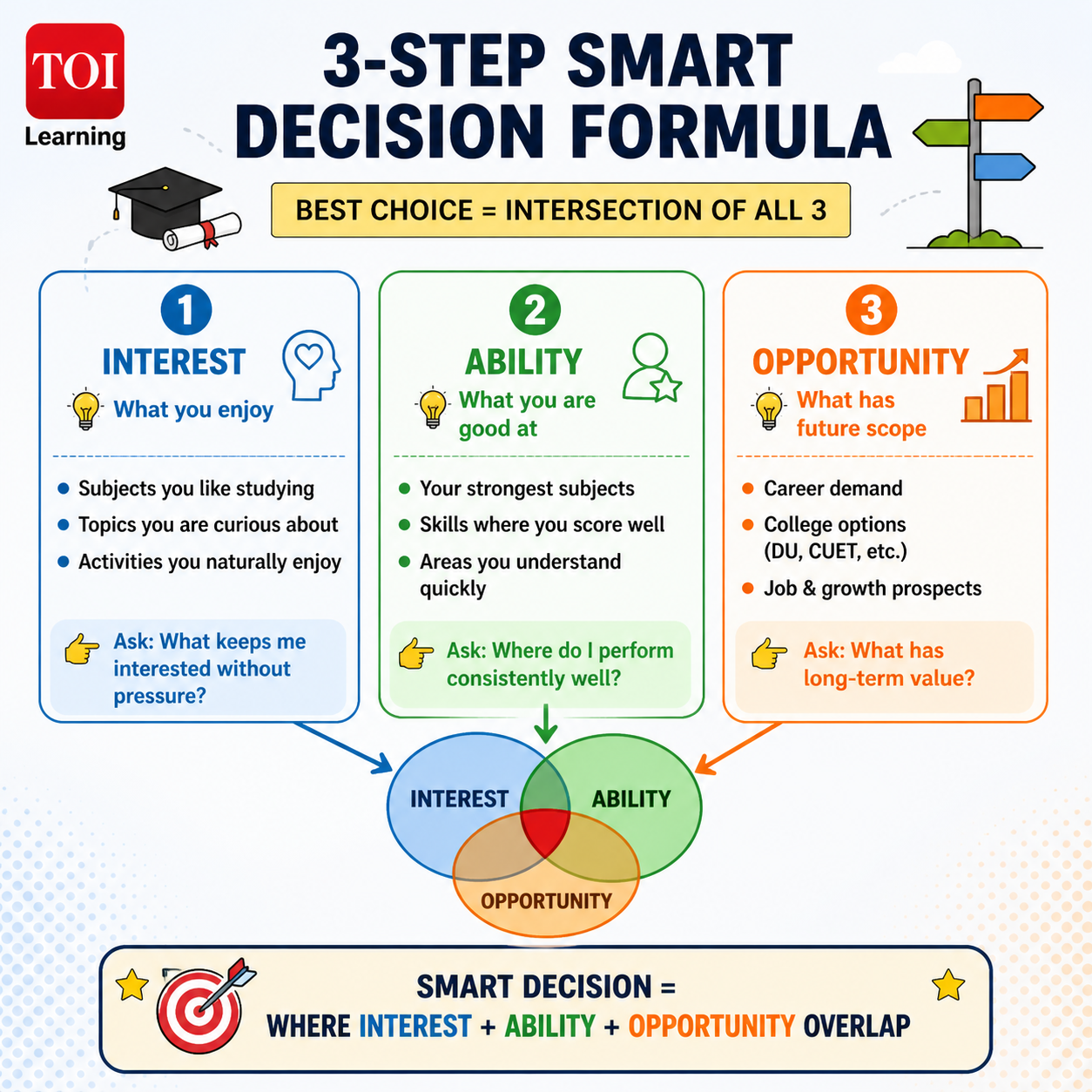
But decisions come when students follow a simple structure. First, they should pause and separate emotion from action, instead of rushing into decisions immediately after results. Second, they should focus on interests and strengths, not just marks. Third, they should clearly understand how admissions work today, especially in universities like DU and JNU, where entrance exams matter more than board percentages. Another useful idea is future regret thinking. Instead of asking “What is safest right now?”, students can ask, “What choice will I feel satisfied with years later?” In today’s system, Class 12 results are not the final destination. They are just a checkpoint in a longer journey. The science of decision-making shows that clarity does not come from speed, but from calm thinking, proper information, and reducing emotional pressure. Ultimately, what matters most after results is not just the score itself, but how thoughtfully a student uses that moment to plan their next step.